Ingredient Study
Blueberries Nutrition: Complete Guide to Health Benefits, Nutrients & Kitchen Uses
Explore the complete nutritional breakdown of wild and cultivated blueberries, including anthocyanins, fiber, glycemic index, and practical everyday recipes.
- Reading time
- 8 minutes
- Category
- Ingredients & Nutrition
- Updated
- 2026-06-25
How to use this guide
Scan the framework first, then use the tables and checklists as practical reference tools.
Key Takeaways: Blueberry Nutrition
- Blueberries provide 57 kcal per 100g with 2.4g dietary fiber and a low glycemic index of approximately 53
- Anthocyanins—the polyphenols responsible for their deep blue-purple pigment—are among the most researched antioxidant compounds in human nutrition
- Wild blueberries contain up to 2x the anthocyanin concentration of cultivated varieties due to greater exposure to environmental stress
- Frozen blueberries retain full anthocyanin content; flash-freezing may even increase bioavailability by gently disrupting plant cell walls
- Blueberries pair well with foods containing vitamin C (to enhance iron absorption) and healthy fats (to support fat-soluble vitamin uptake)
Blueberry Nutritional Profile Per 100g
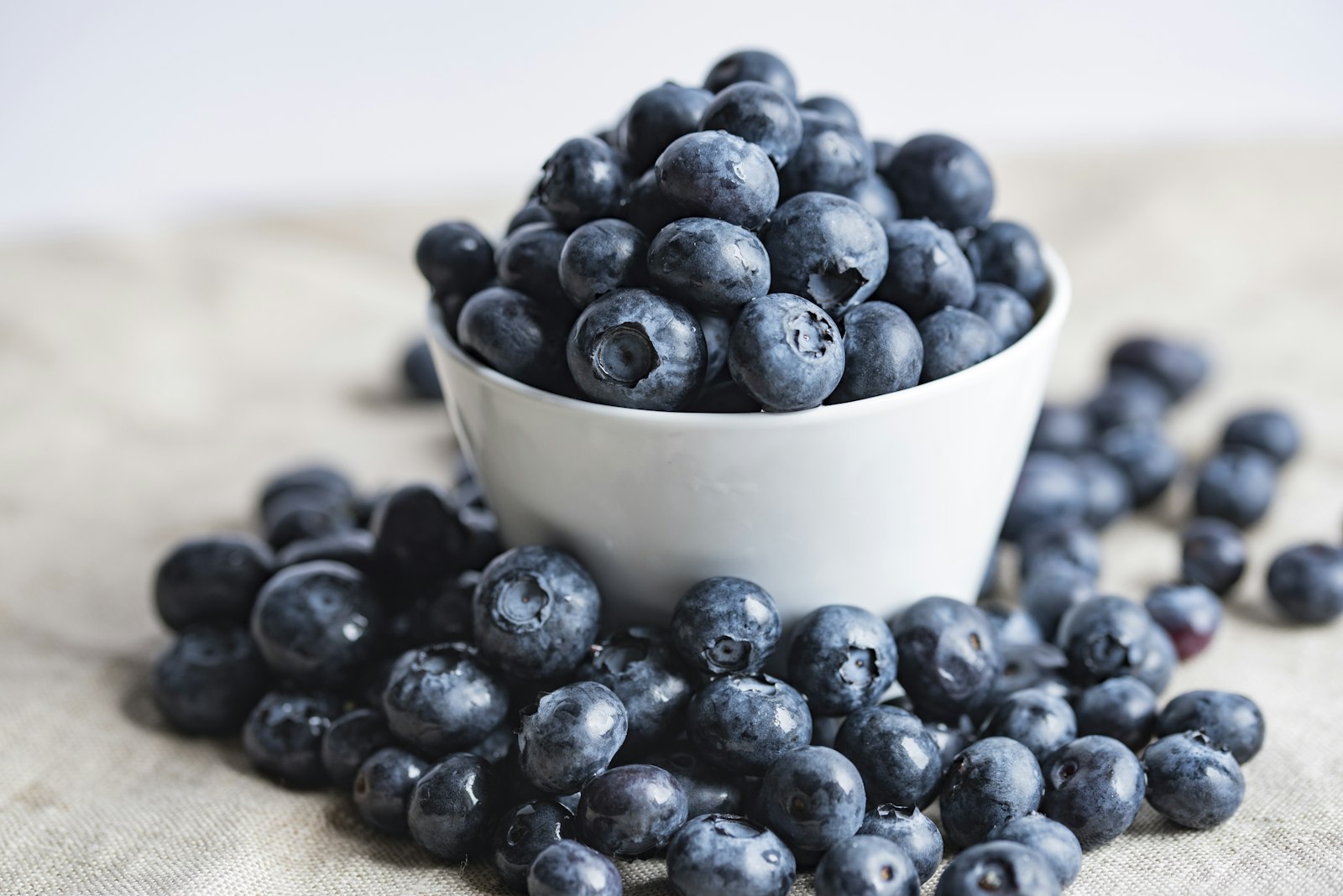
Blueberries are a nutritionally dense, low-calorie fruit that delivers a remarkable concentration of vitamins, minerals, dietary fiber, and bioactive phytochemicals in a small, portable package. One 100-gram serving (approximately three-quarters of a cup) provides just 57 kilocalories, making them one of the most nutrient-dense fruits available by calorie-to-micronutrient ratio. Their macronutrient profile is dominated by complex carbohydrates—primarily the naturally occurring sugars fructose and glucose, buffered by 2.4 grams of dietary fiber—with negligible fat content and minimal protein.
The glycemic index (GI) of fresh blueberries measures approximately 53—classified as low GI—and their glycemic load per typical serving (150g) is even lower at approximately 6. This low glycemic impact results from the combined effect of soluble dietary fiber (which slows intestinal glucose absorption), polyphenols that interfere with carbohydrate-digesting enzyme activity, and the naturally relatively low sugar concentration compared to tropical fruits. For individuals managing blood glucose, blueberries represent one of the most favorable fruit choices available.
Vitamin K, present at 19 micrograms per 100g (16% of the Daily Value), plays a critical role in blood coagulation cascade activation and the carboxylation of osteocalcin for bone mineralization. Vitamin C at 9.7mg per 100g contributes meaningful antioxidant protection and collagen synthesis support. Manganese—at 17% of the Daily Value—is an essential trace mineral functioning as a cofactor for superoxide dismutase, the body's primary mitochondrial antioxidant enzyme.
Blueberries Nutritional Profile (Per 100g Raw)
Serving Size: 100g fresh blueberries (approximately ¾ cup)
| Nutrient | Amount per Serving | % Daily Value* |
|---|---|---|
| Calories | 57 kcal | — |
| Total Carbohydrates | 14.5g | — |
| Dietary Fiber | 2.4g | 9% |
| Total Sugars | 9.96g | — |
| Protein | 0.7g | — |
| Total Fat | 0.3g | — |
| Vitamin C | 9.7mg | 11% |
| Vitamin K | 19mcg | 16% |
| Manganese | 0.34mg | 17% |
| Vitamin E | 0.57mg | 4% |
| Potassium | 77mg | 2% |
Anthocyanins & Polyphenol Power
Blueberries derive their iconic deep blue and purple pigmentation from anthocyanins, a diverse subclass of flavonoid polyphenols belonging to the larger phenylpropanoid biosynthesis pathway. The primary anthocyanins in blueberries include cyanidin-3-glucoside, delphinidin-3-glucoside, malvidin-3-glucoside, petunidin-3-glucoside, and peonidin-3-glucoside. Wild (lowbush) blueberries typically contain 300–500 mg of anthocyanins per 100g, while cultivated (highbush) varieties average 80–200 mg per 100g—a significant difference driven by the higher stress exposure and reduced cell size of wild varieties.
In the body, anthocyanins exert antioxidant activity through multiple mechanisms: directly neutralizing reactive oxygen species (ROS) and nitrogen species, chelating transition metal ions that catalyze free radical formation, and upregulating endogenous antioxidant enzyme expression—including superoxide dismutase, catalase, and glutathione peroxidase. Unlike isolated synthetic antioxidants studied in early clinical trials, the complex polyphenol matrix of whole blueberries appears to produce synergistic antioxidant effects that isolated compounds cannot replicate.
Beyond pure antioxidant activity, anthocyanins interact with signaling pathways involved in vascular tone regulation, neuroinflammation modulation, and gut microbiome composition. Research published in the American Journal of Clinical Nutrition demonstrated that regular blueberry consumption (1 cup daily for 8 weeks) significantly improved flow-mediated dilation—a marker of arterial endothelial flexibility—in participants with mild hypertension. Anthocyanins are bioavailable in the gastrointestinal tract within 2 hours of consumption, with peak plasma concentrations appearing rapidly compared to many other polyphenol classes.
Evidence-Based Health Benefits
Cardiovascular Health: Multiple prospective cohort studies within the Nurses' Health Study and Health Professionals Follow-up Study have associated regular blueberry and strawberry consumption (three or more servings per week) with a 32% reduced risk of myocardial infarction in women over an 18-year follow-up period. Mechanistic pathways include anthocyanin-mediated improvements in LDL oxidation resistance, endothelial nitric oxide bioavailability, platelet function normalization, and systolic blood pressure reduction.
Cognitive Function and Neurological Health: Emerging research from Harvard's T.H. Chan School of Public Health demonstrates associations between long-term habitual berry consumption and significantly slower rates of cognitive aging. Anthocyanins' ability to cross the blood-brain barrier allows direct interaction with neuronal signaling pathways involved in memory consolidation, neurogenesis in the hippocampus, and mitigation of neuroinflammatory cascades implicated in age-related cognitive decline.
Blood Glucose Regulation: Blueberry polyphenols appear to inhibit alpha-glucosidase and alpha-amylase enzyme activity—the intestinal enzymes that break down complex carbohydrates into absorbable glucose—thereby reducing the glycemic impact of co-consumed carbohydrate foods. Additionally, pterostilbene, a methylated stilbenoid found in blueberries, has demonstrated insulin-sensitizing properties in animal models and preliminary human trials.
Gut Microbiome Modulation: Blueberry polyphenols selectively stimulate the growth of beneficial Bifidobacterium and Lactobacillus species within the colonic microbiome while demonstrating antimicrobial activity against pathogenic bacteria. The 2.4g of dietary fiber per serving additionally contributes as a prebiotic substrate, supporting short-chain fatty acid production and intestinal barrier integrity.
Culinary Applications & Storage
Fresh blueberries possess one of the most versatile culinary profiles among commonly available fruits. Their balanced sweet-tart flavor profile pairs harmoniously with neutral dairy bases (plain yogurt, cottage cheese, ricotta), earthy whole grains (overnight oats, baked farro), rich nut butters, fresh mint and basil, citrus zest, vanilla, and warm baking spices. They can be incorporated raw for maximum anthocyanin preservation, or cooked briefly into warm compotes, sauces, and baked goods where heat transforms them into jammy, intensely flavored pools without fully degrading their polyphenol content.
For optimal storage, keep fresh blueberries unwashed in their original ventilated clamshell container or a shallow breathable basket in the coldest part of your refrigerator. Washing introduces moisture that accelerates mold proliferation; rinse under cool water immediately before consuming or cooking. Properly stored dry blueberries remain fresh and firm for 7–10 days refrigerated. For longer preservation, freeze in a single layer on a parchment-lined baking sheet for 2 hours before transferring to airtight freezer bags—preventing clumping—for up to 12 months of peak quality.
Practical daily incorporation ideas: Blend into morning smoothies with spinach, chia seeds, and unsweetened almond milk; fold into warm steel-cut oatmeal with a drizzle of almond butter; toss raw into spinach and feta grain salads for color and antioxidant contrast; simmer into warm compotes with lemon zest and a pinch of cardamom to spoon over Greek yogurt or whole-grain pancakes; or freeze in ice cube trays with coconut water for antioxidant-rich hydration cubes.
Frequently Asked Questions About Blueberries
Evidence-based answers to the most common questions about blueberry nutrition, storage, and health benefits.
Yes. Frozen blueberries are flash-frozen at peak ripeness, locking in vitamins, minerals, and anthocyanins. In fact, research indicates that freezing can actually increase the bioavailability of anthocyanins by gently breaking down plant cellular structures.