Ingredient Study
Cauliflower Nutrition: Vitamins, Glucosinolates & Creative Culinary Uses
An evidence-based examination of cauliflower's nutrient density, gut health benefits, sulforaphane precursors, and versatile kitchen techniques.
- Reading time
- 9 minutes
- Category
- Ingredients & Nutrition
- Updated
- 2026-07-10
How to use this guide
Scan the framework first, then use the tables and checklists as practical reference tools.
Key Takeaways: Cauliflower Nutrition
- Cauliflower provides only 25 kcal per 100g with 53% of the Daily Value for vitamin C—making it one of the most nutrient-dense low-calorie vegetables available
- Glucosinolates in cauliflower are hydrolyzed into sulforaphane, an isothiocyanate that activates Nrf2-mediated antioxidant and detoxification enzyme pathways
- Dietary choline (44mg per 100g) supports acetylcholine neurotransmitter synthesis, cellular membrane phospholipid integrity, and hepatic fat metabolism
- Roasting at 400-425°F (200-220°C) preserves significantly more glucosinolates and vitamin C than boiling in water
- Cauliflower's culinary versatility—as rice, mash, steaks, or pizza base—makes it the most adaptable low-calorie carbohydrate substitute available
Nutritional Profile Per 100g
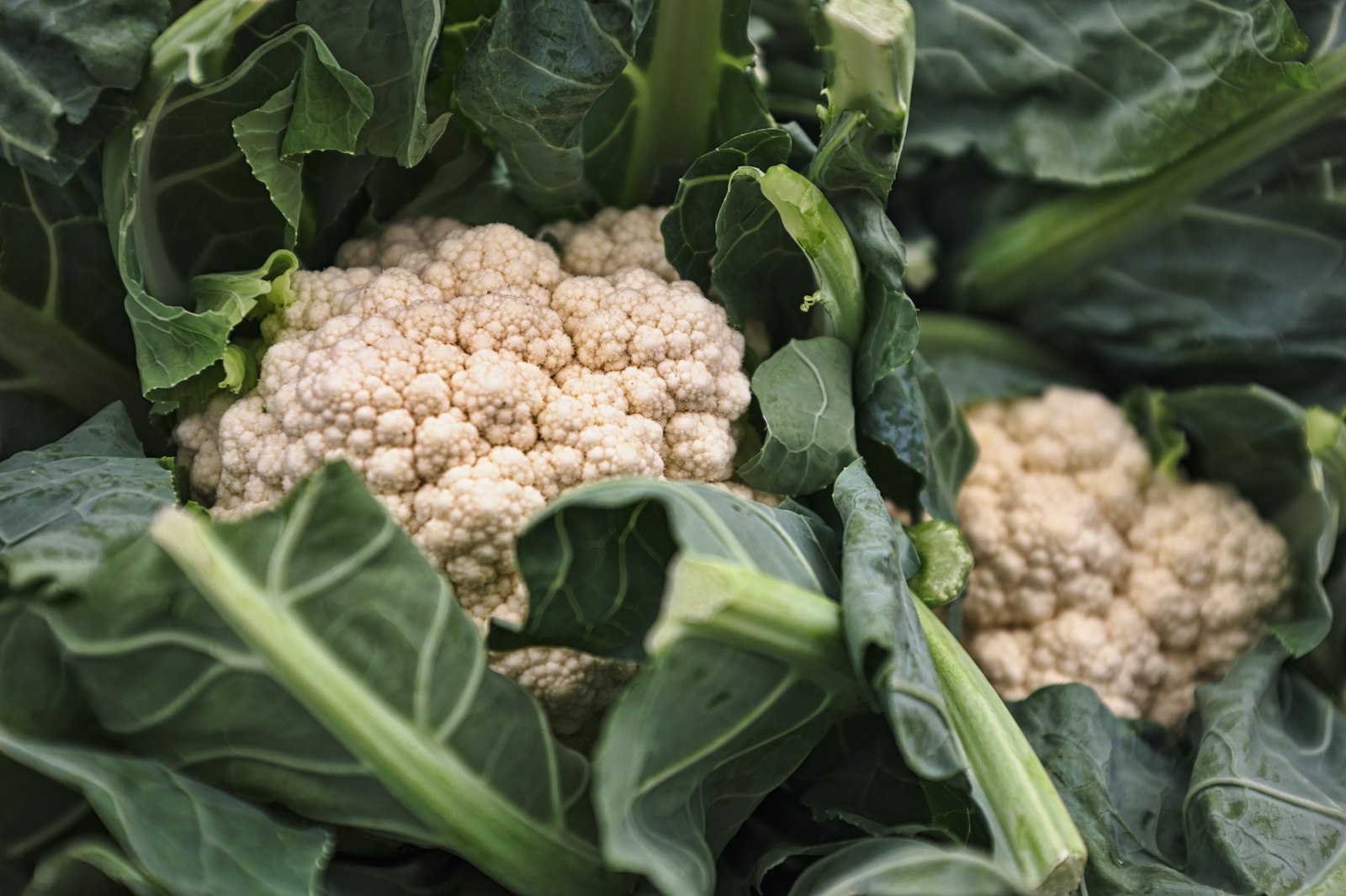
Cauliflower is a nutritional exemplar of the cruciferous vegetable family, delivering exceptional micronutrient density within a remarkably low caloric envelope. At just 25 kilocalories per 100-gram serving (approximately one cup of florets), cauliflower provides 53% of the Daily Value for vitamin C—surpassing many citrus fruits in concentration—along with meaningful amounts of folate, vitamin K, vitamin B6, potassium, and the often-overlooked essential nutrient choline. Its 1.9 grams of protein per 100g is unusually high for a non-legume vegetable, making it a valuable contributor to daily protein intake for plant-forward eaters.
Folate at 57mcg per 100g (14% DV) is critical for one-carbon metabolism, DNA methylation, and nucleotide biosynthesis. Adequate folate intake is particularly important during periods of rapid cellular division—pregnancy, early development, and times of physical training stress. Vitamin B6 (0.18mg, 11% DV) serves as a coenzyme in over 100 enzymatic reactions, with primary roles in amino acid metabolism, neurotransmitter synthesis (serotonin, dopamine, GABA), and glycogen breakdown. The 299mg of potassium supports electrolyte balance, cardiac rhythm regulation, and arterial blood pressure homeostasis.
The 2 grams of dietary fiber per 100g includes both soluble fiber (contributing to LDL cholesterol management and glucose buffering) and insoluble fiber (supporting intestinal transit and colonic mucosal cell health). Cauliflower's low carbohydrate content (5g per 100g, with only 1.9g net digestible sugars) and negligible fat profile establish it as one of the most flexible vegetables for blood glucose management strategies and reduced-carbohydrate dietary approaches.
Cauliflower Nutritional Profile (Per 100g Raw)
Serving Size: 100g raw cauliflower florets (approximately 1 cup)
| Nutrient | Amount per Serving | % Daily Value* |
|---|---|---|
| Calories | 25 kcal | — |
| Total Carbohydrates | 5g | — |
| Dietary Fiber | 2g | 8% |
| Total Sugars | 1.9g | — |
| Protein | 1.9g | — |
| Total Fat | 0.3g | — |
| Vitamin C | 48mg | 53% |
| Vitamin K | 16mcg | 13% |
| Choline | 44mg | 8% |
| Folate | 57mcg | 14% |
| Potassium | 299mg | 6% |
| Vitamin B6 | 0.18mg | 11% |
Glucosinolates & Sulforaphane
Glucosinolates are sulfur-containing secondary plant metabolites that serve as chemical defense compounds against herbivory and pathogenic microorganisms. In cauliflower and other cruciferous vegetables, the primary glucosinolates include glucoraphanin, sinigrin, glucobrassicin, and gluconasturtiian. When plant cell walls are disrupted by chewing, cutting, or crushing, the enzyme myrosinase—stored in separate cellular compartments—is released to hydrolyze glucosinolates into their bioactive breakdown products: isothiocyanates (primarily sulforaphane from glucoraphanin), indoles, and nitriles.
Sulforaphane is the most extensively researched cruciferous isothiocyanate and operates primarily by activating the Nrf2 (Nuclear factor erythroid 2-related factor 2) transcription factor pathway. When Nrf2 is activated by sulforaphane, it translocates to the nucleus and upregulates the expression of Phase II detoxification enzymes—including glutathione S-transferase, NAD(P)H:quinone oxidoreductase, and heme oxygenase-1—that collectively neutralize reactive oxygen species, electrophilic carcinogens, and pro-inflammatory oxidative stress mediators. This explains the mechanistic basis for epidemiological associations between cruciferous vegetable intake and reduced risk of certain cancers observed in prospective cohort studies.
Critically, cooking method profoundly affects glucosinolate retention. Boiling cauliflower in water causes 40–60% leaching of glucosinolates into the cooking water within 10 minutes; this water is subsequently discarded, removing the primary bioactive compounds entirely. Steaming retains approximately 75% of glucosinolates. High-heat dry roasting at 400–425°F (200–220°C) for 20–25 minutes preserves the highest glucosinolate concentration while simultaneously developing Maillard reaction browning that deepens flavor complexity. Chopping or ricing cauliflower before roasting—rather than cooking whole florets—maximizes myrosinase enzyme exposure for greater isothiocyanate yield.
Evidence-Based Health Benefits
Choline for Brain and Liver Health: Cauliflower is one of the highest plant-based sources of dietary choline—an essential nutrient classified by the National Academy of Medicine that most adults do not consume at adequate levels. Choline serves as the precursor to acetylcholine (the primary neuromuscular junction neurotransmitter and key cognitive signaling molecule), phosphatidylcholine (the dominant phospholipid of cell membranes), and betaine (a methyl donor for homocysteine remethylation, protecting against cardiovascular disease). In the liver, choline is essential for assembling VLDL lipoprotein particles that export triglycerides; choline deficiency results in fatty liver accumulation (hepatic steatosis) even in the absence of excessive fat or alcohol intake.
Anti-Inflammatory and Cellular Protective Effects: Beyond sulforaphane's Nrf2 pathway activation, cauliflower's indole compounds—particularly indole-3-carbinol (I3C) and its gastric condensation product diindolylmethane (DIM)—modulate estrogen metabolism by directing estrogen toward less proliferative 2-hydroxyestrone metabolites rather than the more mitogenic 16alpha-hydroxyestrone pathway. This estrogen metabolism modulation represents a plausible biological mechanism linking cruciferous vegetable intake to reduced hormone-sensitive tissue cancer risk in observational research.
Blood Glucose and Weight Management: With only 5 grams of total carbohydrate and 25 calories per 100g serving, cauliflower provides substantial volume and satiety with minimal glycemic impact. Its ability to substitute for higher-calorie, higher-carbohydrate foods—replacing grain rice, potato mash, or pizza dough—allows for meaningful reductions in meal caloric density while maintaining structural and textural satisfaction. Population studies consistently show that higher dietary volume with lower caloric density is one of the most effective and sustainable strategies for appetite regulation.
Roasting & Kitchen Uses
Cauliflower's neutral flavor profile and uniquely firm-yet-tender texture after cooking make it the most culinarily versatile cruciferous vegetable. The Maillard reaction—which occurs above 280°F (140°C) between amino acids and reducing sugars—transforms bland raw florets into deeply golden, nutty, caramelized pieces with complex savory depth. For optimal roasting: cut florets into 1.5-inch uniform pieces, toss with 1–2 tablespoons of avocado or olive oil and spices, and roast on a single uncrowded layer on a heavy sheet pan at 425°F (220°C) for 22–28 minutes, flipping once at the halfway mark.
Cauliflower Rice: Pulse raw florets in a food processor until they reach a coarse grain-like texture (10–15 seconds), or grate on a box grater. Sauté in a dry skillet over medium-high heat for 4–6 minutes with salt and aromatics; the residual moisture will steam away, leaving fluffy, separate "rice" grains. One cup of cauliflower rice delivers approximately 25 calories and 5g carbohydrates versus 215 calories and 45g carbohydrates in an equivalent serving of white rice.
Cauliflower Mash: Steam florets until completely tender (12–15 minutes), drain thoroughly, and blend in a food processor with warm vegetable broth, a touch of butter or olive oil, roasted garlic, and sea salt until silky smooth. The result is a velvety mash with one-fifth the calories of traditional mashed potatoes while providing significantly higher vitamin C, folate, and glucosinolate content. Cauliflower steaks—thick 1-inch cross-section slabs of the full head—roast magnificently in a cast-iron pan or at high oven heat, developing dramatic char and textural contrast between crisp exterior and tender interior.
Frequently Asked Questions About Cauliflower
Evidence-based answers about cauliflower nutrition, cooking methods, and culinary substitutions.
Boiling can cause up to 50% of water-soluble vitamins (like Vitamin C and folate) and glucosinolates to leach into the cooking water. Roasting, steaming, or sautéing preserves substantially higher concentrations of delicate micronutrients.